
Harmonising with Nature's Flow
Realigning Human Water Management Practices with Environmental Sustainability

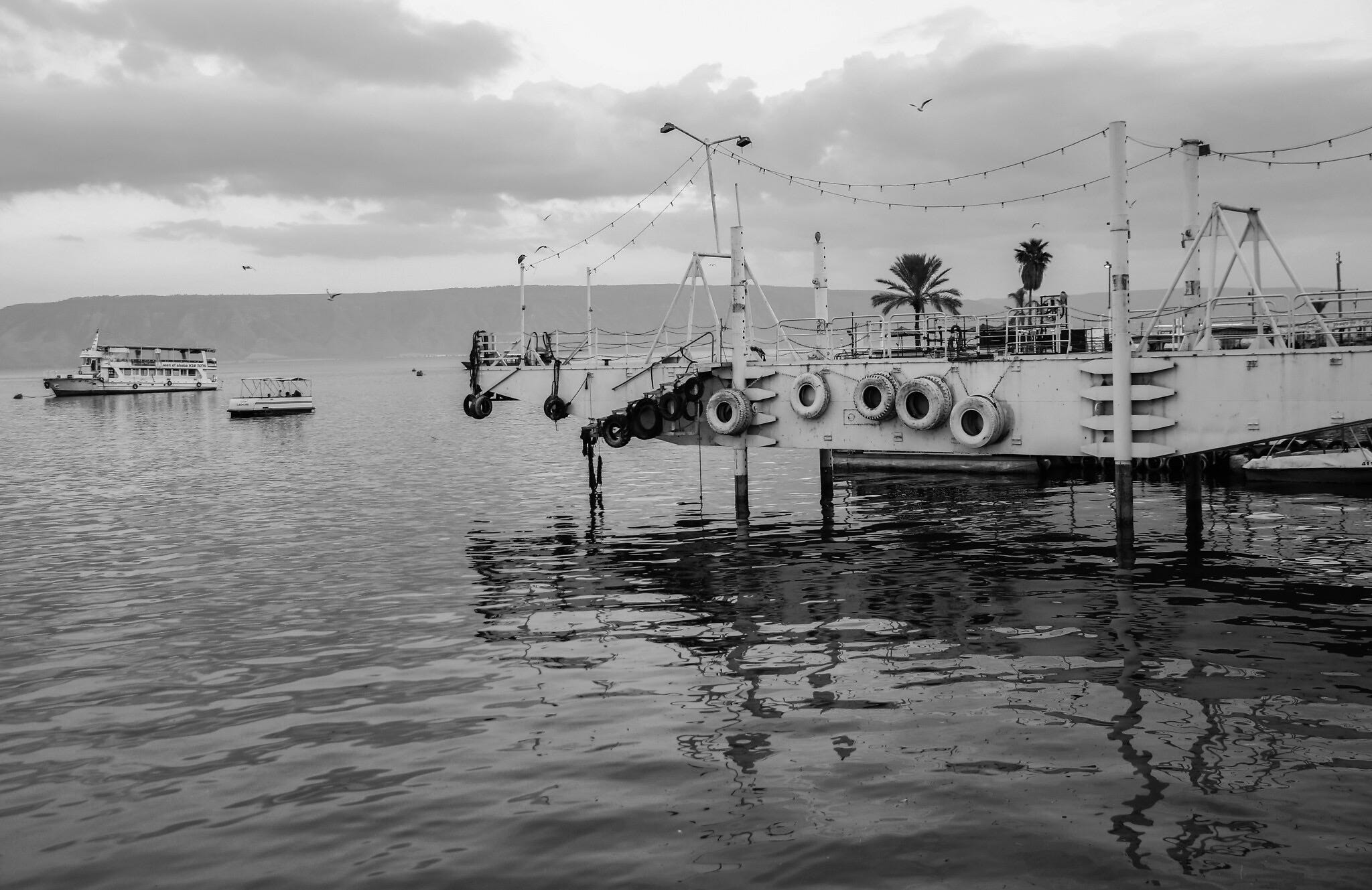
2008 was the worst of the seven-year drought in Israel. The water levels in the Sea of Galilee, the country's largest freshwater lake, were perilously close to the black line.1 Breaching the line would render the lake unusable due to salt infiltration. The Israeli government was compelled to impose the unpopular water sanctions across the country. Fifteen years later, Israel stands transformed, as a water surplus nation.
The cornerstone of Israel's success lies in its pioneering desalination technology. However, a multitude of other equally significant measures have contributed to Israel's water turnaround. Awareness generation and education campaigns attempted to sensitise the people of the water scarcity, explaining and justifying the mitigating steps. Recognising the excessive water outflows into agriculture, a multi-faceted strategy was undertaken. A staggering 80% of Israel's wastewater is recycled for irrigation. This saves freshwater resources, both from diversions to irrigation and from the potential contamination of wastewater. Open water canals were replaced with pipes. Simcha Blass’s modern drip irrigation system was extensively adopted.2 Israel, today, boasts the highest crop per drop ratio in the world.3
In stark contrast to Israel's holistic approach, India's water management strategies have traditionally followed a supply-centric model, seeking to augment water supply through a command and control relationship with nature. This is done through large scale river interlinking and dam construction projects that attempt to train the river. Despite being endowed with relatively abundant water resources, India is staring at an impending water crisis. Projections show that India will have only 50% of the water it needs by 2030.4 90% of Indian freshwater is used in agriculture.5 Additionally, it fares poorly in agriculture water utilisation efficiency.6
For a country that uses almost all of its freshwater very inefficiently in agriculture, laws to conserve water in the agricultural sector are wholly absent. Surprisingly, stringent measures are enforced in the sectors where the scope for conservation is minimal - industry and utility sectors account for 5% of the national water use.7 There is an urgent need to address these gaps.
Water should be treated as a flow instead of a stock of material resource as is done by the hitherto water policies in India. River basins should be the unit of governance.8 Water rights should be separated from land rights. A system of water markets can be explored for efficient allocation of water resources. A paradigm shift in policy that adopts a systems approach to water management is necessary.
The first step towards this shift came in the form of the Draft National Water Policy of 2022. The Ministry of Jal Shakti, for the first ever time, set up a committee of independent experts led by Dr Mihir Shah, to draft this policy. The committee submitted its recommendations in 2022. The draft policy inculcates a multi-stakeholder approach operating within the natural contours of nature.9
With water being a state subject, the draft National Water Policy is for the states to adopt. On the plus side, there are government initiatives facilitating wider adoption of drip irrigation. Newer irrigation projects are using pipes instead of canals for better efficiency. However, river linking and dam construction projects are still actively being pursued in various parts of the country. The Ken-Betwa linking project was awarded the final clearance last month. Godavari-Krishna and Penna-Cauvery projects are under consideration. Cauvery-Vaigai-Gundar project's land acquisitions are underway.
The draft policy presents a promising vision. Its effectiveness hinges on decisive action. With some political will and collective effort, India can overcome its water challenges and emerge as a water-secure nation.
https://www.nytimes.com/2015/05/30/world/middleeast/water-revolution-in-israel-overcomes-any-threat-of-drought.html
https://hasbarafellowships.org/drip-irrigation-israels-ingenious-invention/
https://www.orfonline.org/expert-speak/if-80-water-consumption-in-india-is-for-agriculture-why-is-it-unregulated-and-inefficient/
https://economictimes.indiatimes.com/opinion/et-commentary/an-impending-water-crisis-can-cripple-indias-agriculture-sector-heres-how-to-tackle-it/articleshow/98923063.cms
https://www.financialexpress.com/opinion/water-is-food-indian-agriculture-must-be-geared-towards-efficient-use-of-water/3273540/
https://www.downtoearth.org.in/news/agriculture/this-smart-tech-can-promote-water-efficiency-88624
https://www.orfonline.org/expert-speak/if-80-water-consumption-in-india-is-for-agriculture-why-is-it-unregulated-and-inefficient/
https://www.orfonline.org/research/indias-enduring-war-of-water-governance-paradigms/
https://www.ideasforindia.in/topics/governance/india-s-new-national-water-policy-a-paradigm-shift.html#